
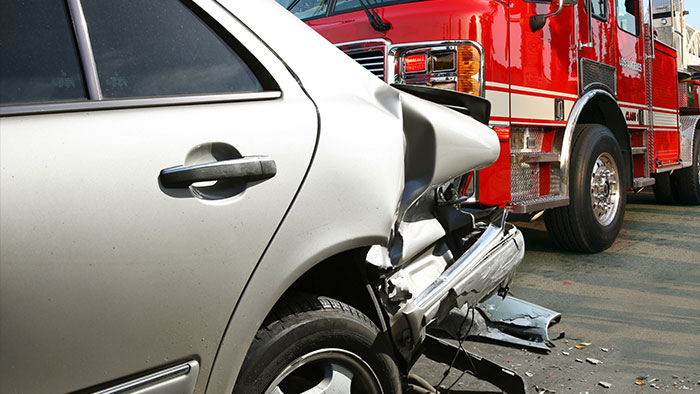

One of the most common ways insurance companies in Hudson County reduce personal injury settlements is by arguing that the injured person shares fault for the accident. Whether the claim involves a car accident, a slip and fall, or a workplace injury, the defense almost always includes some version of “you could have avoided this.” Under New Jersey’s modified comparative negligence rule, that argument has real financial consequences. The Law Offices of Anthony Carbone has handled personal injury claims throughout Jersey City and Hudson County for over 35 years, and the fault allocation dispute is one of the most consistently contested elements of any negotiation or trial.
Understanding how New Jersey’s comparative negligence law works, how insurers use it strategically, and how fault percentages get established and challenged is essential for any injured person in New Jersey who is evaluating a settlement offer or deciding whether to pursue a claim.
How New Jersey’s 51% Bar Rule Actually Works
New Jersey follows modified comparative negligence under N.J.S.A. 2A:15-5.1. The statute allows an injured plaintiff to recover damages even if they were partially at fault for the accident, as long as their share of fault does not exceed 50 percent. If a plaintiff is found to be 51 percent or more responsible, they are barred from recovering anything. If they are 50 percent or less at fault, they recover their damages reduced by their percentage of responsibility.
The math is straightforward. A plaintiff whose total damages are $100,000 and who is found 30 percent at fault recovers $70,000. The same plaintiff found 51 percent at fault recovers nothing. That single percentage point separating 50 from 51 represents the difference between significant compensation and a complete bar to recovery, which is why the fault allocation dispute is fought so aggressively in New Jersey personal injury litigation.
When multiple defendants are involved, New Jersey’s joint and several liability rules also apply. Under the current framework, defendants who are more than 60 percent at fault can be held jointly and severally liable for the plaintiff’s full damages. Defendants below that threshold are generally liable only for their proportionate share. In cases with multiple defendants, each party’s percentage of fault is determined by the jury or agreed upon in settlement, and those allocations affect how the plaintiff’s recovery is ultimately paid.
How Insurance Adjusters Use Comparative Negligence to Reduce Your Settlement
Insurance adjusters are trained to find fault on the plaintiff’s side. In a car accident case, the adjuster will look for evidence that the injured driver was speeding, following too closely, distracted, or failed to react reasonably. In a slip and fall, the adjuster will argue the plaintiff was not paying attention, was wearing inappropriate footwear, or ignored a warning sign. In a bicycle or pedestrian accident, the adjuster will question whether the plaintiff crossed against the light, was outside the crosswalk, or was wearing dark clothing at night.
These arguments are often introduced early in the claims process, sometimes before the injured person has retained an attorney. An adjuster who can get a recorded statement from an unrepresented claimant has an opportunity to elicit admissions about the claimant’s own conduct that will later be used to assign them a larger share of fault. The offer that follows is then presented as a reasonable reflection of the plaintiff’s reduced recovery, when in reality it reflects a fault allocation the injured person never agreed to and may have valid grounds to dispute.
The practical impact across a case population is significant. A defendant insurer that can consistently move plaintiffs from 10 percent fault to 30 percent fault saves 20 cents on the dollar across every claim. Multiplied across thousands of cases, the incentive to argue comparative fault is enormous, and the adjusters who do it well are not acting in bad faith. They are doing their job. The plaintiff’s job, with the help of an attorney, is to counter those arguments with evidence.
How Fault Percentages Are Established and Challenged in New Jersey Claims
Fault allocation in New Jersey personal injury cases is ultimately a factual question, not a legal one. It is determined by whoever resolves the case, whether that is a jury at trial, an arbitrator, or the parties in a negotiated settlement. The evidence that shapes that determination is what attorneys on both sides work to develop.
On the plaintiff’s side, building the fault case against the defendant means gathering the accident scene evidence, obtaining surveillance footage before it is overwritten, preserving the physical condition of the location in a premises liability case, identifying witnesses who observed the conditions that caused the accident, and obtaining the police report or incident report and any prior notice the defendant had of the dangerous condition. In car accident cases, accident reconstruction experts can analyze vehicle damage, skid marks, and electronic data from event data recorders to establish speed and braking at the moment of impact.
On the defendant’s side, the same categories of evidence are used to push fault in the other direction. This is why the quality of the plaintiff’s attorney’s investigation, and how quickly that investigation begins after the accident, has a direct effect on the ultimate fault allocation.
Comparative Fault in Hudson County: Common Scenarios Where This Rule Arises
In Jersey City and throughout Hudson County, certain recurring fact patterns generate comparative fault disputes with high frequency. Intersections along Routes 1 and 9, the approaches to the Holland Tunnel, and the dense residential streets near the PATH stations are high-accident corridors where fault is routinely disputed. A driver rear-ended at a congested intersection who was momentarily rolling forward when the collision occurred will face an argument that they contributed to the contact.
Slip and fall cases at commercial properties in Jersey City, Union City, and North Bergen generate comparative fault arguments around whether the plaintiff should have seen the hazard, whether they were distracted by a phone, or whether the area was marked with cones or signage the plaintiff ignored. The New Jersey “mode of operation” doctrine, which can impose liability on self-service businesses for foreseeable floor hazards created by their business model, is a separate and important legal theory in these cases.
Construction accident cases in Hudson County’s active development corridors along the waterfront frequently involve comparative fault arguments against injured workers based on their alleged deviation from safety protocols. These cases are complicated by the workers’ compensation system, which bars negligence claims against the direct employer but allows third-party claims against general contractors, property owners, and others.
Why Comparative Fault Disputes Require Attorney Review Before Any Settlement
The most common mistake injured people make in New Jersey is accepting a settlement offer without understanding what fault percentage the insurer used to calculate it. Settlement offers are not transparent by default. An adjuster who calculated an offer based on a 40 percent fault assignment to the plaintiff is not required to disclose that math. The injured person receives a number, and without knowing the methodology, they have no basis to evaluate whether the offer is fair or to push back on the fault allocation embedded in it.
An experienced personal injury attorney evaluates both the damages and the fault allocation as separate questions. If the damages are being calculated correctly but the plaintiff is being assigned 35 percent of the fault when the evidence supports 10 percent, attacking that fault number is where the recovery opportunity exists. Conversely, if the plaintiff’s conduct genuinely was a significant contributing cause of the accident, an attorney can assess that honestly and advise on whether the offer reflects a realistic litigation outcome.
Contact The Law Offices of Anthony Carbone Before Accepting Any Settlement That Assigns You Fault
New Jersey’s comparative negligence system is a legitimate and important legal framework, but it is also the most commonly used tool for reducing personal injury recoveries in Hudson County. The fault percentage assigned to you in a settlement is not a neutral determination. It reflects the insurer’s interest, and it is subject to challenge.
The Law Offices of Anthony Carbone has represented injured people throughout Jersey City, Newark, Union City, North Bergen, Bayonne, and Hudson County for over 35 years. Attorney Carbone evaluates comparative fault disputes as a core part of every personal injury case, ensuring that the fault allocation embedded in any offer is grounded in the actual evidence and not simply in the insurer’s advantage. If you have been injured in an accident and have been told that you were partly at fault, contact the office at 201-685-3442 for a free consultation before agreeing to anything.









Leave a Comment